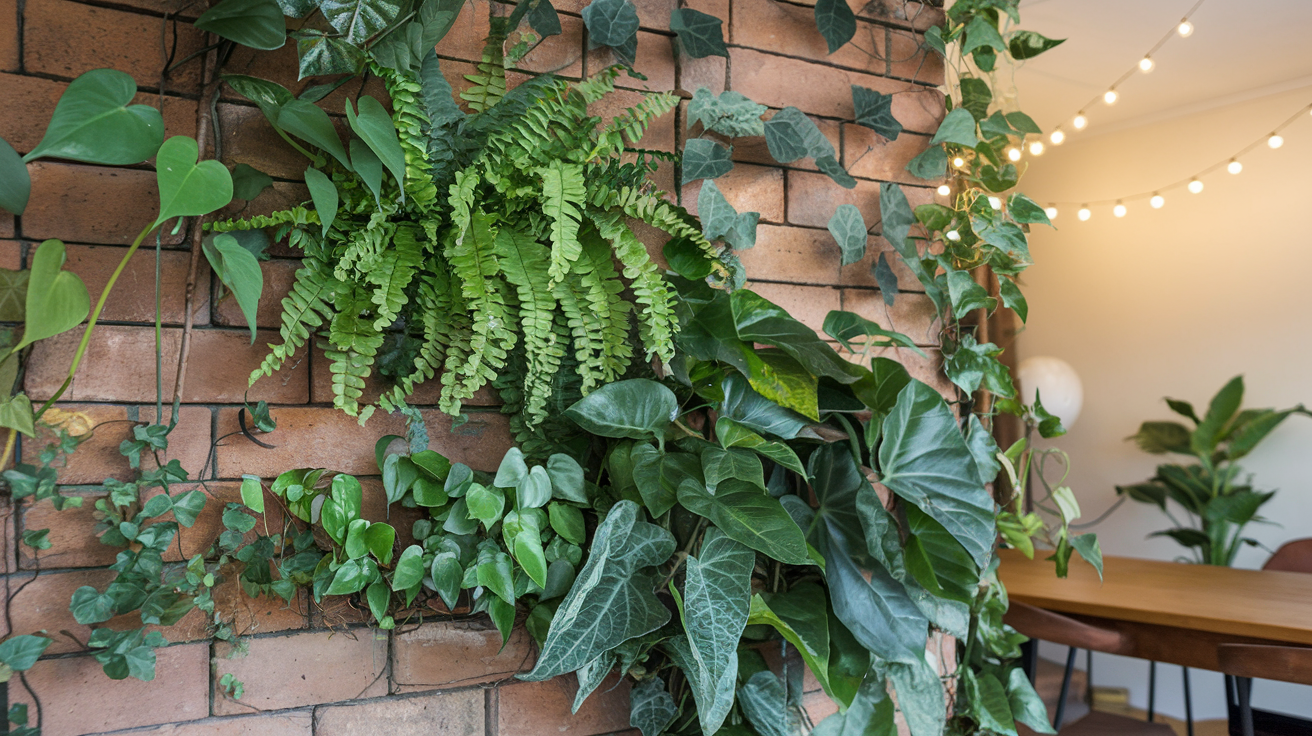
An indoor plant wall fails in one of two ways: the plants die within a month because the location was wrong, or they survive but take over the wall in a direction nobody planned for. Both problems come from the same mistake, choosing plants before choosing the right spot.
This guide works the other way around: location and light first, plant selection second, then the maintenance system that keeps it looking good long term.
1. Choose the Right Location for Your Green Wall

Choosing the right location is essential when setting up a green wall in a home. Most plants thrive in indirect sunlight, making it important to find a spot that provides light without overheating. Ensuring the environment is neither too hot nor too cold helps plants remain healthy and visually vibrant.
If natural light is limited, supplemental grow lights or selecting low-light plant varieties can maintain a lush and refreshing appearance. Matching the conditions to the plants’ needs ensures the green wall enhances both aesthetics and well-being over time.
2. Select Suitable Plants for Your Living Wall

Choosing the Right Plants for a Vertical Garden Wall
Selecting suitable plants is essential for creating a successful indoor vertical garden. Some of the best options include:
- Pothos – A low-maintenance plant that thrives in a range of light conditions and improves air quality. Pothos adds lush greenery to any plant wall while requiring minimal care.
- Ferns – These plants prefer humidity and bright, indirect light. They are ideal for bathrooms or kitchen areas with higher moisture levels and create a natural, tropical atmosphere.
- Spider Plants – Adaptable and easy to maintain, spider plants feature cascading leaves that add charm and texture. They are a versatile choice for beginners seeking both style and ease of care.
- Succulents – Suited for bright, dry areas, succulents offer unique shapes and colors that bring texture to a plant wall. They thrive in sunny spots and do not require frequent watering.
- Philodendrons – Hardy and elegant, philodendrons produce long cascading vines that work well in hanging or wall-mounted planters. Their draping foliage enhances the visual appeal of any vertical garden.
Combining plants with varying leaf shapes, sizes, and colors creates a dynamic and visually interesting indoor plant wall that enhances both style and well-being.
3. Use the Right Plant Wall System

Several options are available for creating a vertical plant wall indoors:
- Wall-mounted planters – Perfect for a minimalist design while keeping plants organized and accessible.
- Floating shelves – Offer flexibility for arranging a variety of plant sizes and shapes, allowing seasonal or design updates.
- Pocket planters – Fabric or felt pouches that accommodate multiple plants and save space while adding texture.
- Trellises or grids – Suitable for vining plants such as ivy or pothos, helping guide growth and create visual interest.
- Modular living wall panels – Include self-watering systems that simplify maintenance and support healthy plant growth.
Choosing a system that suits the room’s lighting and space while providing proper drainage and air circulation ensures a thriving indoor plant wall that is both functional and visually appealing.
Favorite Tools & Tips for Your Indoor Plant Wall:
4. Ensure Proper Watering and Drainage

Overwatering is one of the most common mistakes when maintaining a vertical plant wall indoors. To avoid root rot and ensure healthy growth:
- Use pots with drainage holes or a self-watering system – Proper drainage prevents water from accumulating and damaging roots.
- Water plants according to their specific needs – For example, succulents require less water than ferns to thrive.
- Install a drip irrigation system – Provides consistent moisture with minimal effort and reduces the risk of overwatering.
- Use a moisture meter – Checking soil dryness before watering ensures each plant receives the appropriate amount of water.
Proper watering techniques maintain plant health, enhance the longevity of the green wall, and contribute to a lush, vibrant display that complements any indoor space.
5. Maintain Proper Humidity Levels

Many plants used in a vertical greenery wall thrive in humid environments. In homes with dry air, it is important to maintain adequate moisture for plant health:
- Use a humidifier – Helps maintain optimal humidity levels for tropical and moisture-loving plants.
- Mist plants occasionally – Ideal for ferns and other tropical species to prevent leaf drying.
- Place a small water tray near the plant wall – Increases ambient humidity naturally and supports plant vitality.
Ensuring proper humidity contributes to lush, vibrant plant growth and helps create a thriving indoor vertical garden.
6. Prune and Rotate Plants Regularly

To keep a vertical plant wall fresh, vibrant, and thriving, regular maintenance is essential:
- Trim dead or yellowing leaves – Promotes healthy growth and prevents decay from spreading to other plants.
- Rotate plants periodically – Ensures even light exposure and balanced growth across the wall.
- Fertilize every few weeks – Use a diluted liquid fertilizer to provide essential nutrients without overfeeding.
- Remove overcrowded plants – Allows proper air circulation and prevents disease or mold development.
Consistent maintenance supports the longevity and visual appeal of an indoor vertical garden while encouraging healthy, vigorous plant growth.ests, diseases, and uneven growth in your vertical plant arrangement.
7. Add Decorative Elements to Enhance Your Plant Wall

To make a botanical feature wall more visually engaging, consider incorporating:
- Fairy lights – Create a cozy and inviting ambiance around the greenery.
- Decorative pots – Neutral or earthy tones help the plants blend seamlessly with interior decor.
- Wooden or metal frames – Provide structure and visual organization for the plant arrangement.
- Small hanging ornaments – Add subtle personality and charm to the display.
These design elements complement the greenery while enhancing the overall aesthetic of the space.
Successful indoor plant walls require careful plant selection, appropriate watering, and consistent maintenance. Following these tips ensures a thriving vertical garden that enhances your home’s atmosphere. Whether the goal is a minimalist arrangement or a lush, jungle-inspired feature, a living wall provides an effortless way to introduce greenery and natural appeal indoors.
Personal Insights on Creating an Indoor Plant Wall

Creating a lush indoor greenery wall can be a rewarding way to enhance home interiors, but initial attempts often involve trial and error. Choosing suitable plants, managing watering schedules, and providing appropriate light can be challenging, and early mistakes such as overwatering or neglecting certain species are common. Learning from these experiences and adjusting care routines makes it possible to establish a thriving vertical garden. A well-planned plant wall not only adds visual appeal but also improves air quality, supports a calming atmosphere, and remains manageable for long-term maintenance.
What Helped Me Grow a Flourishing Plant Wall

- Choosing the right plants – Selecting species that thrive in the home’s light and humidity conditions is essential for a successful indoor plant wall. This ensures healthy growth and reduces the risk of plant stress.
- Investing in proper drainage – Using pots with drainage holes and improving air circulation prevents waterlogged soil and root rot, supporting long-term plant health.
- Setting up a watering schedule – Monitoring soil moisture with a meter helps provide the right amount of water for each plant, avoiding overwatering or neglect.
- Using a mix of plant wall systems – Combining floating shelves, wall-mounted planters, and trellises creates a visually dynamic and structured vertical garden while accommodating different plant types.
- Being patient – Plants require time to adapt and grow, so consistent care and observation lead to a thriving and sustainable greenery wall over time.

Today, the vertical garden has become one of the most cherished features in the home. Achieving this thriving greenery wall required trial and error, careful plant selection, and consistent maintenance, but the results bring both visual appeal and a calming atmosphere that make the effort worthwhile.
FAQ: Indoor Plant Wall Maintenance and Setup
1. What are the best plants for an indoor plant wall?
Low-maintenance species such as pothos, philodendrons, ferns, and spider plants are ideal for vertical gardens. Selecting plants that thrive in indirect light and tolerate indoor humidity ensures long-term health and reduces the need for frequent care. Incorporating a mix of leaf shapes and textures can also make the plant wall visually dynamic.
2. How should an indoor plant wall be watered?
Watering can be done manually with a spray bottle or watering can, or through a drip irrigation system for more consistent results. Proper drainage is essential to prevent root rot and maintain healthy plant growth. Using a moisture meter helps monitor soil conditions and ensures each plant receives the appropriate amount of water.

3. Are grow lights necessary for an indoor plant wall?
If a plant wall receives limited natural light, LED grow lights can be used to support healthy growth. These lights are particularly beneficial during shorter daylight months or in rooms with minimal window exposure. Positioning the lights to cover all areas evenly helps maintain consistent plant health.
4. Can an indoor plant wall be created without drilling?
Yes, several renter-friendly options are available. Adhesive planters, freestanding vertical planters, and leaning ladder shelves allow for creative plant wall setups without permanent wall modifications. These methods are effective for displaying greenery while preserving flexibility.
5. How often should an indoor plant wall be maintained?
Plants should be checked weekly for dust, pests, and signs of overgrowth. Regular pruning and wiping leaves with a damp cloth help maintain their appearance and health. Monitoring soil moisture and removing overcrowded plants supports long-term vitality of the vertical garden.
Ultimate Indoor Plant Wall Checklist
Creating Your Thriving Indoor Plant Wall

- Choose a bright spot with indirect natural light to support healthy plant growth. Positioning plants where they receive soft illumination helps prevent leaf burn while promoting vibrant foliage.
- Select low-maintenance indoor plants such as pothos, philodendrons, ferns, and spider plants. These species adapt well to indoor conditions and provide lush greenery with minimal care.
- Decide on a vertical mounting system that complements the interior, such as wooden frames, hanging planters, or shelves. A thoughtful arrangement enhances both aesthetic appeal and functionality.
- Prepare nutrient-rich soil or an appropriate growing medium to support strong root development and long-term plant health.
- Plan an efficient watering method, either manual or using an automatic drip irrigation system, to keep plants consistently hydrated and prevent overwatering.
- Ensure proper drainage and airflow to reduce the risk of mold, root rot, or other moisture-related issues.
- Establish a regular care routine including watering, pruning, and leaf cleaning to maintain vibrant and healthy greenery over time.
Maintaining Your Indoor Plant Wall for Long-Term Health

- Check soil moisture weekly using a simple finger test or a moisture meter to prevent overwatering or underwatering. Consistent monitoring helps plants stay healthy and reduces the risk of root damage.
- Dust leaves every two weeks to maintain efficient photosynthesis and keep foliage looking vibrant. Clean leaves also reduce the chance of pest infestations.
- Prune dead or damaged leaves promptly to encourage new growth and maintain a tidy, visually appealing plant wall.
- Monitor for pests regularly and use safe, natural pest control methods such as neem oil or insecticidal soap when necessary. This ensures plants remain strong without introducing harmful chemicals.
- Fertilize plants monthly with suitable organic plant food to provide essential nutrients and support sustained growth and vitality.
This article may contain affiliate links. If you make a purchase through these links, I may earn a small commission at no extra cost to you. Thank you for supporting the blog!