Warm white and beige kitchens stay popular for a simple reason: they age well. Trends shift around them but the base never looks wrong. More practically, light neutral tones reflect natural light better than most other colour choices, which matters a lot in kitchens where you spend real time working.
Here’s how to make the palette interesting rather than safe.
Why Warm White and Beige Kitchens Are Trending
Neutral kitchens have always been a design favorite, with warm whites and beige shades increasingly taking center stage in contemporary interiors. Key advantages include:
Bright and Airy Ambience – These tones reflect natural light, making even compact kitchens feel open, spacious, and welcoming.
Timeless Elegance – Warm neutrals retain a classic appeal, ensuring the kitchen remains stylish despite changing design trends.
Design Flexibility – These shades coordinate effortlessly with different textures, materials, and accent colors, allowing for easy updates over time.
Inviting Comfort – Warmer neutrals introduce subtle softness, creating a cozy and welcoming atmosphere compared with stark, cold whites.
Enhances Natural Elements – Wood, stone, and metal finishes are complemented naturally, emphasizing textures and highlighting the beauty of authentic materials.
Key Design Elements for a Warm White or Beige Kitchen
1. Soft-Toned Cabinetry

Cabinets in warm white or beige establish an inviting foundation for the kitchen. Matte or satin finishes create a sleek, modern appearance, while lightly distressed wood adds a rustic, lived-in charm.
2. Natural Stone Countertops

Marble, quartz, or granite in soft beige or subtle veining elevates the kitchen’s elegance. These materials combine long-lasting durability with a visually appealing, refined appearance.
3. Warm Lighting

Effective lighting preserves the welcoming atmosphere of a warm white or beige kitchen. Warm LED strips under cabinets, pendant lights above an island, or vintage-inspired bulbs can enhance comfort and highlight design details.
4. Textured Backsplash

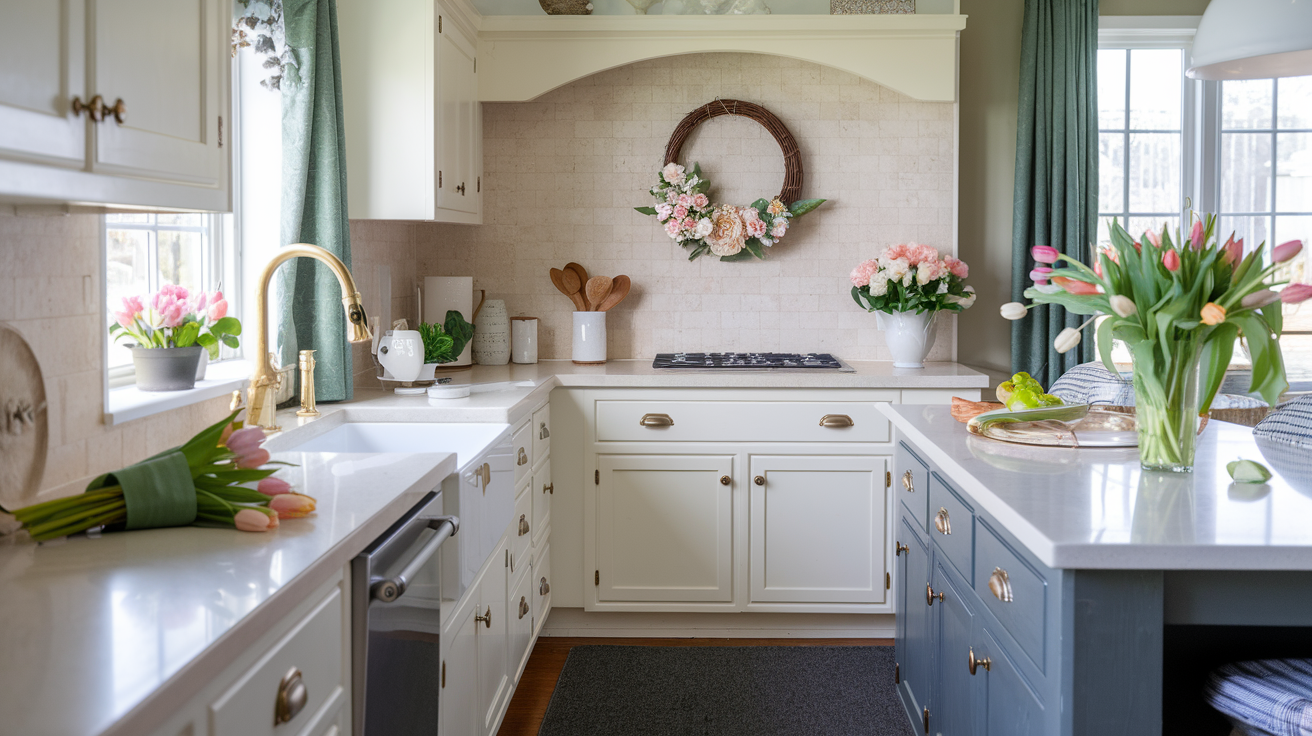
A backsplash in beige subway tile, natural stone, or herringbone pattern introduces depth and visual interest while maintaining a subtle, stylish look.
5. Monochromatic Color Palette
Using a range of warm whites and beige tones creates a serene and cohesive kitchen design. Combining shades of cream, ivory, and soft beige produces a light-filled space with subtle depth and understated elegance. Variations in hue and saturation add dimension without overpowering the room.
This palette is enhanced by mixing materials and textures, such as glossy cabinetry paired with matte walls or light stone countertops.

This approach works particularly well in smaller kitchens, maximizing the sense of space while maintaining a timeless, sophisticated atmosphere.
6. Wood Accents
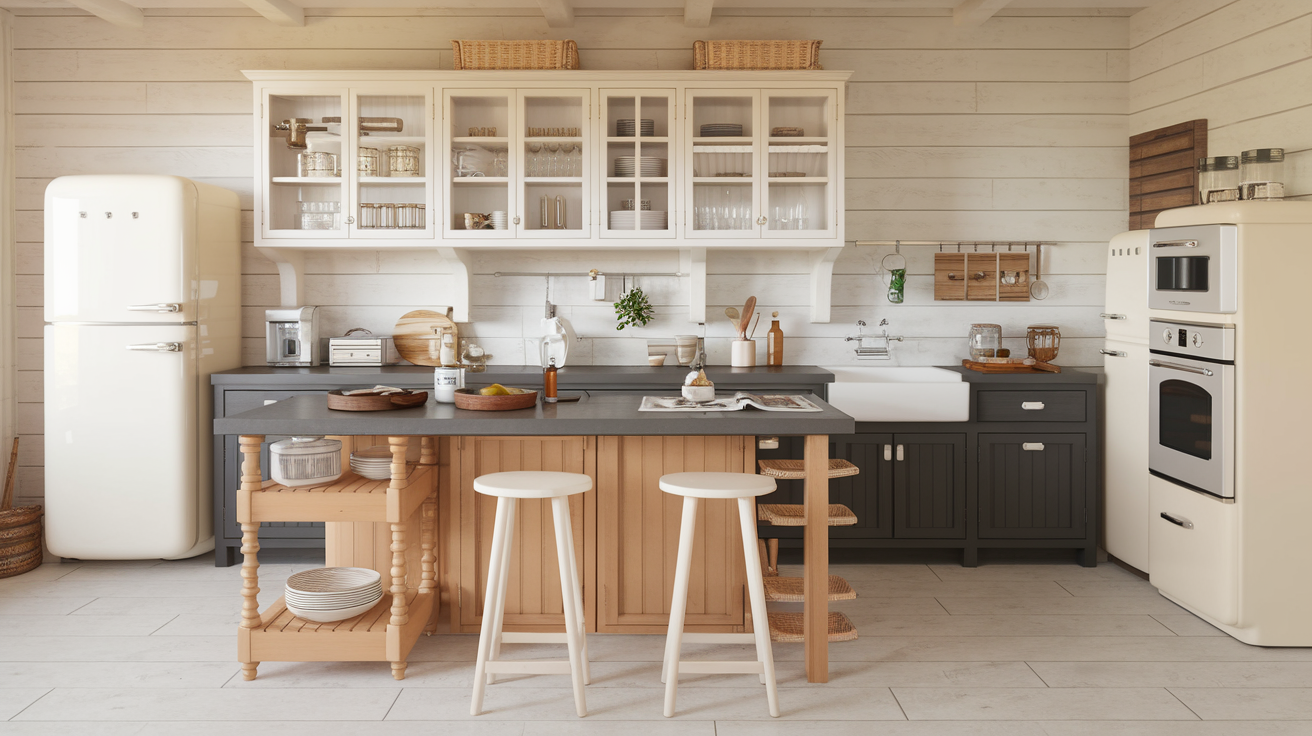
Wooden elements bring warmth and natural texture to a warm white or beige kitchen. Features such as floating shelves, butcher block countertops, or rattan bar stools introduce subtle contrast against neutral tones while softening the overall atmosphere.

Light to medium woods, such as oak or maple, complement warm white and beige shades without dominating the space. These natural touches enhance the kitchen’s visual appeal while adding a cozy, organic feel.
Cozy Wood Decor Ideas for Your Kitchen
Incorporating wood through cabinetry, furniture, or smaller details like handles and cutting boards creates a balanced and inviting atmosphere that remains both modern and timeless.
Best Color Combinations for a Warm White or Beige Kitchen
Beige and Sage Green – Pairing beige with sage green creates a soothing, nature-inspired look. Sage green introduces a fresh, organic element that enhances the warmth of beige, producing a calm and elegant kitchen atmosphere. The earthy qualities of both shades work together to establish a harmonious and relaxing environment.

Warm White and Terracotta – Combining warm white with terracotta creates a cozy and stylish kitchen atmosphere. The rich, earthy tones of terracotta accents add warmth and depth to walls, cabinetry, or decorative elements.
This pairing works especially well for rustic or Mediterranean-inspired designs, with terracotta appearing in tiles, pottery, or small accessories to enhance texture and character.

Beige and Navy Blue – Pairing beige with deep navy blue creates a modern and sophisticated contrast. The warm neutrality of beige provides a soft backdrop that highlights the richness of navy, resulting in a luxurious yet timeless kitchen atmosphere.
This combination works well for accents such as cabinetry, backsplashes, or dishware, adding depth and elegance to the space.

How to Maintain a White or Beige Kitchen
Protecting Light Surfaces from Yellowing – Warm white and beige kitchens can gradually yellow over time, particularly when exposed to direct sunlight or cooking residues. Regular cleaning and proper ventilation help preserve the freshness of these tones.
Use gentle, non-abrasive cleaners designed for light-colored surfaces to remove grease and stains without causing discoloration. Wiping down cabinets, walls, and other surfaces every few weeks prevents dust and grime buildup, keeping the kitchen bright and inviting.

Installing UV-blocking window treatments helps minimize sunlight exposure, protecting surfaces from yellowing. If discoloration appears, a mild solution of diluted vinegar and water can gently restore brightness without damaging finishes.
Cleaning Stone Countertops – Stone surfaces such as granite or marble are valued for their durability and refined appearance, but they require careful maintenance to remain pristine. Avoid harsh chemicals, which can damage the stone, and instead clean with a mild dish soap solution and warm water.
Use soft cloths or sponges to prevent scratching, and apply a baking soda and water paste for stubborn stains, avoiding polished surfaces to protect their finish. Regular resealing is important to guard against spills and stains, particularly in warm white or beige kitchens where discoloration is more noticeable.
Small Kitchen? No Problem!
Warm white and beige tones are ideal for compact kitchens, creating a sense of openness and brightness. Key strategies include:

- Glossy Cabinet Finishes – Reflective surfaces on cabinets amplify natural and artificial light, making small kitchens feel more open.
- Handleless Cabinets – Sleek, seamless cabinetry enhances a clean and modern appearance.
- Mirrored or Glass Elements – Incorporating mirrors or glass surfaces adds visual depth and expands the sense of space.
- Light-Colored Flooring – Pale floors maintain an airy and open atmosphere, complementing warm white and beige tones.
Open Shelving vs. Closed Cabinets: Choosing the Best Option
Selecting between open shelving and closed cabinets is a key decision in kitchen design. Each approach offers distinct advantages, and the best choice depends on functional needs, style preferences, and maintenance considerations.
Open Shelving – Open shelves create a sense of airiness and spaciousness while showcasing dishes, cookbooks, or decorative items. This option adds personality to the kitchen and works well in smaller spaces, visually expanding the area while maintaining a casual, relaxed atmosphere.

Open shelves require consistent care, as exposed surfaces can collect dust and cooking residues more quickly, especially near work areas. Maintaining a tidy and organized display is essential to keep the kitchen visually appealing. Choosing attractive and cohesive kitchenware enhances the overall look, making open shelving ideal for spaces where functional display and aesthetic presentation are priorities.
Closed Cabinets – Closed cabinetry provides a traditional and streamlined appearance, making it ideal for maintaining a clutter-free, minimalistic kitchen. By concealing dishes, utensils, and appliances, closed storage ensures a clean and organized environment. This approach supports a polished, sophisticated aesthetic while reducing the need for frequent upkeep.

Closed cabinets protect stored items from dust, moisture, and cooking residues, helping maintain cleanliness and durability. They also offer greater flexibility with color and style, allowing for a cohesive kitchen design without concern for the appearance of individual items. While storage is concealed, organization remains important to ensure easy access and maintain an efficient, functional space.
Final Touches for a Cozy Kitchen
Adding warmth and personality to a warm white or beige kitchen relies on thoughtful decorative details. Ceramic vases, potted plants, and wooden trays can soften the overall look while introducing natural textures. Woven baskets, linen curtains, or fabric placemats contribute to a relaxed, organic atmosphere.

Open shelving can be styled with curated displays of attractive dishware, cookbooks, or small decorative objects, adding character and visual interest.
Subtle accents such as copper or brass utensils, textured kitchen towels, or soft rugs can enhance coziness while complementing neutral tones. Incorporating small lighting features, like under-cabinet LEDs or pendant lights with warm bulbs, further emphasizes an inviting ambiance.
These carefully selected touches transform a neutral-toned kitchen into a space that feels both stylish and comfortably lived-in.
Key Insights
A kitchen in warm white or beige creates a harmonious balance of elegance and comfort, making it suitable for a variety of home styles. These shades complement both minimalist designs and farmhouse-inspired interiors, providing a versatile foundation that adapts over time.
Integrating natural materials, soft lighting, and subtle color accents enhances the space, resulting in a kitchen that is both inviting and practical.
This article may contain affiliate links. If you make a purchase through these links, I may earn a small commission at no extra cost to you. Thank you for supporting the blog!